Proof I can turn Codex work into team adoption evidence.
I am not pitching generic SWE tenure. I am showing a narrower, inspectable signal: public proof surfaces, verifier code, cleanroom boundaries, and a deployment memo for making AI coding workflows teachable.
Current lane
Primary role: AI Deployment Engineer - Codex, Remote - US. OpenAI's careers page currently lists Codex deployment roles across Technical Success, including the Remote-US lane.
The case is not that I have already worked inside OpenAI. The case is that my work already lives at the customer adoption layer: demos, receipts, failure maps, verifier gates, and handoff artifacts.
Inspect these first
What each surface proves
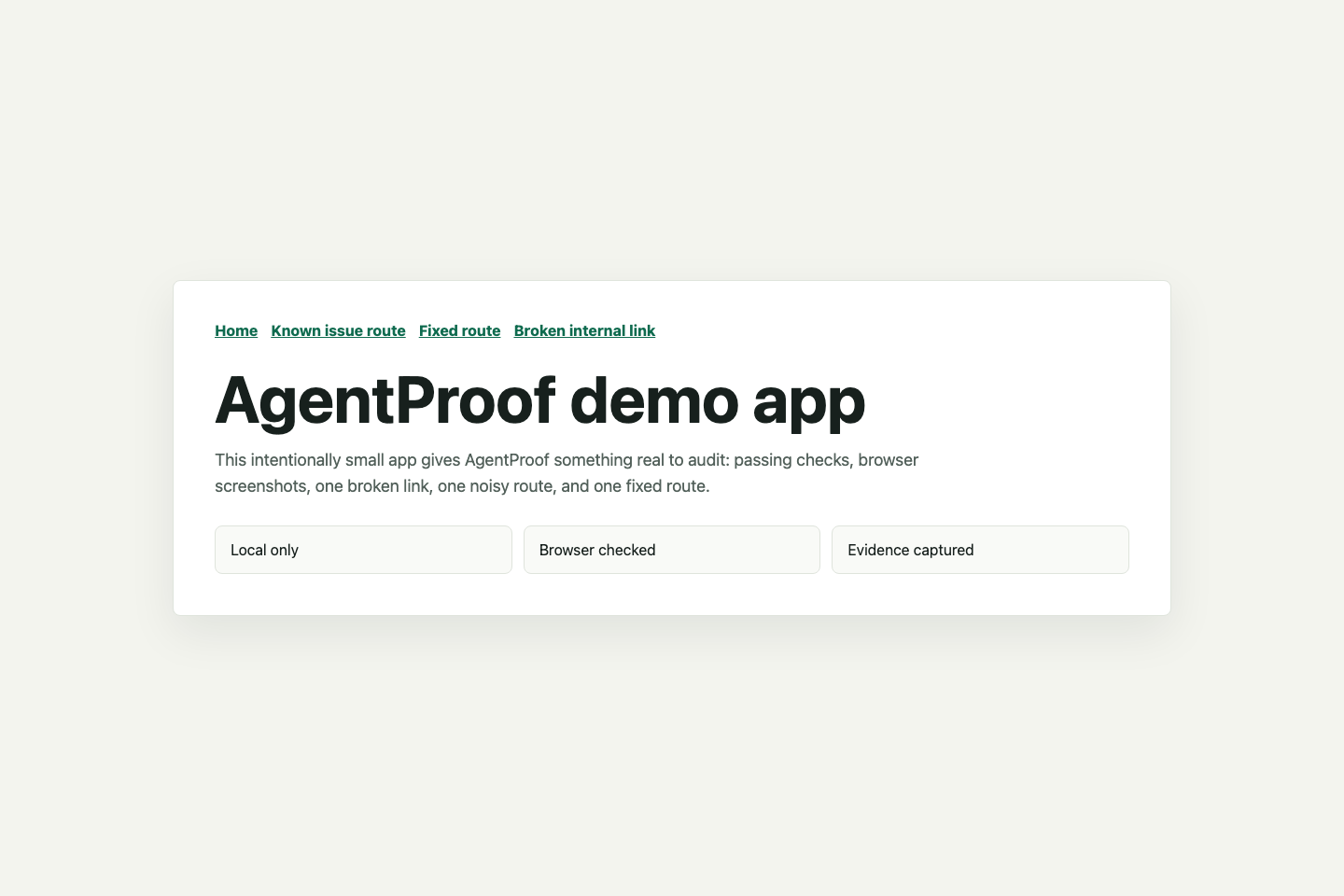
- AgentProof AI-built app claims need command checks, browser evidence, screenshots, console failures, and rerun trails.
- Deployment memo Customer teams need a scoped task, demo, failure map, security boundary, and receipt before AI coding scales.
- Workshop kit The deployment story becomes a 90-minute enablement run: scope card, live coding pass, failure map, rollout gate, and handoff receipt.
- Patterns guide The workshop gets a written technical-content layer: scope contracts, context budgets, verifier-first demos, receipts, adoption gates, and product feedback loops.
- 30-day plan The role fit becomes a first-month field trial: intake, demos, workshop, receipt handoff, and product feedback packet.
- Scorecard The first-month field trial gets an executable readiness gate: role coverage, score, release gates, official source URLs, and no-outbound boundary.
- Assessment drill The interview route gets executable proof: a candidate-style deployment response scored across design, code quality, performance, tests, communication, deployment judgment, and operational safety.
- Reviewer benchmark The outside-review route gets a time budget: five public steps, seven comprehension signals, source links, and legal boundary checks.
- Autonomy status The autonomous proof lab checks its own scheduler, heartbeat, public pages, safety scans, and no-outbound gates before future growth work.
- Field kit The first-month plan becomes reusable templates for intake, scope, receipt, ready/repair/reject decisions, and product feedback.
- Sample run The templates are filled on a real public-safe task, including verifier results, misses, decisions, and product signal.
- Receipt reference The receipt pattern becomes code: ready/repair/reject fixtures, validator, markdown renderer, feedback packet, repair-state handoff, ready-state second-service handoff, simulated feedback export, unit tests, and CI.
- Cleanroom repo The proof-lab concept is public, non-affiliated, testable, and explicit about not copying OpenAI identity or systems.
- Proof Ledger A public-safe inspector verifies the projected hash chain and shows the current mission graph.
- GitHub Actions The public proof-lab repo verifies itself in CI instead of relying on narrative-only claims.
Why this maps to Codex deployment
- Codex adoption is a workflow design problem, not only a model capability story.
- Reference implementations should include failure traces and review gates, not just polished demos.
- Customer feedback needs to separate model behavior, repo context, tool harnesses, permissions, acceptance criteria, and simulated signal from real deployment claims.
- A deployment engineer needs proof artifacts a team can rerun after the workshop ends.
Cleanroom line
This page is independent from OpenAI. It uses OpenAI and Codex only to name public target roles and source context. It does not use OpenAI logos, product UI, private systems, or affiliation language.
Sources checked: OpenAI Careers search, AI Deployment Engineer - Codex, and OpenAI brand guidance.